Construction sites, renovation projects, demolition work, and even routine property maintenance all produce debris. Some projects generate small piles, others create mountains of broken concrete, twisted metal, scrap wood, drywall fragments, and assorted waste. Whatever the scale, debris doesn’t take care of itself. It needs to be sorted, hauled, and properly disposed of. That’s the job of debris removal.
This guide walks through what Debris Removal Detroit actually involves, the types of debris commonly handled, the methods used, and why proper removal matters far beyond simply tidying up a job site.
What Is Debris Removal?
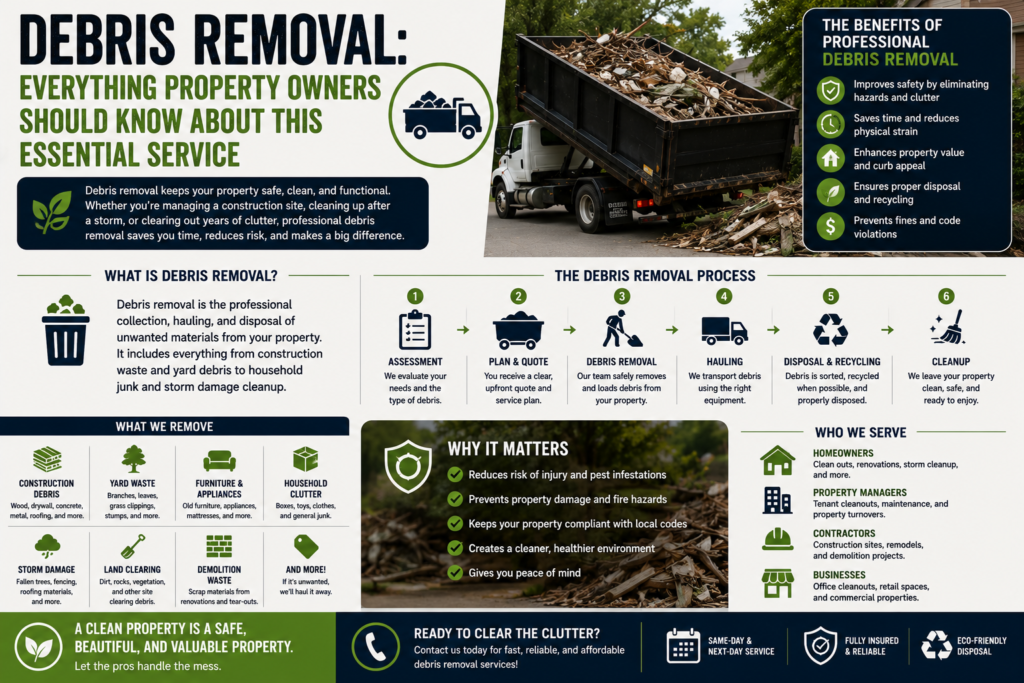
Debris removal is the professional process of clearing waste materials from a property and disposing of them responsibly. Unlike general junk hauling, which often focuses on household items, debris removal is geared toward construction, demolition, landscaping, and renovation waste. It also covers storm damage, fire damage cleanup, and large-scale property cleanup projects.
Crews use specialized equipment to load, transport, and dispose of materials at appropriate facilities. Recyclable items are routed to recycling centers, hazardous materials are handled according to regulations, and the rest goes to approved landfills.
Common Types of Debris
The category of debris is broader than most people realize. A typical project may generate any combination of the following:
Construction and demolition debris. Concrete, bricks, drywall, lumber, roofing materials, insulation, glass, metal, and plumbing fixtures all fall into this category. These materials make up the bulk of waste on most construction and renovation projects.
Yard and landscaping debris. Branches, tree trunks, brush, leaves, sod, and stumps from clearing or storm damage.
Concrete and masonry waste. Broken slabs, asphalt fragments, sidewalk pieces, and similar materials are common after concrete cutting or driveway removal.
Storm and disaster debris. Fallen trees, damaged building materials, and scattered debris from severe weather events.
Renovation waste. Old cabinets, flooring, fixtures, appliances, and built-ins removed during home remodeling.
Industrial and commercial debris. Larger-scale materials from warehouses, manufacturing facilities, and commercial properties undergoing renovation or demolition.
Mixed waste. A combination of materials that often can’t be easily separated and requires careful handling.
Why Proper Debris Removal Matters
Letting debris pile up isn’t just an eyesore, it’s a real problem. Here’s why timely, professional removal is so important.
Site safety. Construction sites with scattered debris see more injuries. Sharp materials, exposed nails, broken concrete edges, and tripping hazards put workers and visitors at risk. Regular debris removal keeps the site safer.
Project efficiency. Cluttered sites slow down work. Removing waste progressively rather than waiting until the end keeps the workspace organized and lets crews focus on the next phase.
Environmental protection. Construction debris can contain materials that harm the environment if dumped improperly. Concrete in waterways disrupts ecosystems, treated wood can leach chemicals into soil, and certain insulation materials pose health risks. Responsible removal includes proper sorting and disposal.
Recycling and sustainability. A significant portion of construction debris can be recycled. Concrete can be crushed into aggregate for new projects, metal has high recycling value, wood can become mulch or biomass fuel, and even drywall has recycling potential. Professional debris removal increases recycling rates.
Regulatory compliance. Local, state, and federal regulations govern how construction and demolition debris is transported and disposed of. Improper disposal can result in fines and legal issues.
Aesthetic and neighborhood considerations. A clean site reflects well on the property owner and the contractors involved. It also reduces complaints from neighbors and the surrounding community.
How Debris Is Typically Sorted
Modern debris removal isn’t just about hauling everything to a landfill. Professionals sort materials based on type and disposal pathway. Sorting often begins on site, separating recyclables from general waste. At processing facilities, materials are further sorted and routed appropriately.
Concrete and masonry are usually crushed and reused as aggregate. Metals are sent to scrap yards for recycling. Wood is chipped for mulch or biomass. Cardboard, paper, and certain plastics go to recycling streams. Hazardous materials such as asbestos, lead-containing materials, and certain chemicals require specialized handling and certified disposal.
The Debris Removal Process
A typical debris removal project starts with an assessment. Crews evaluate the volume and types of debris, the site conditions, access points, and any special considerations such as hazardous materials. From there, they plan the equipment, dumpsters, trucks, and labor needed for the job.
Once work begins, debris is gathered, loaded, and transported in roll-off dumpsters or specialized trucks. Larger jobs may require multiple loads or ongoing service throughout the project. Materials are taken to appropriate facilities for recycling, processing, or disposal. After removal is complete, a final cleanup ensures the site is left tidy and safe.
Disposal Methods for Construction Debris
There are several main pathways debris takes after it leaves a site.
Reduction. Reducing waste by planning carefully, deconstructing rather than demolishing where possible, and avoiding over-ordering materials.
Reuse. Items in good condition such as bricks, fixtures, and architectural details may be reclaimed for future projects.
Recycling. Most construction debris has recyclable components, including concrete, metal, wood, asphalt, and certain plastics.
Disposal. Materials that can’t be reused or recycled are sent to landfills, ideally facilities licensed for construction and demolition waste.
Common Questions About Debris Removal
Can I just toss construction debris in my regular trash? No. Residential trash services typically can’t handle the volume or types of materials produced by construction or demolition. Specialized debris removal is needed.
What about hazardous materials? Items like asbestos-containing materials, lead paint debris, and certain chemicals require specialized handling. Professional crews know how to identify and properly route these materials.
Is debris always taken to a landfill? Not necessarily. A significant portion is recycled or repurposed, depending on the materials and the disposal facilities available.
How quickly can debris be removed? It depends on the project size and the type of service used. Roll-off dumpsters allow ongoing removal, while one-time hauls handle finished projects quickly.
Is debris removal required by law? In many cases, yes. Building codes, environmental regulations, and permit conditions all play a role in how debris must be managed.
Why Detroit Properties Often Need Debris Removal
Detroit’s active construction scene, ongoing redevelopment projects, and large stock of older buildings mean that debris removal is a constant need across the region. From major demolitions to small renovation projects, the volume of construction waste generated is significant. Professional Debris Removal Detroit services help keep job sites safe, efficient, and compliant, while supporting the recycling and disposal infrastructure that the community depends on.
Final Thoughts
Debris removal might not be the most glamorous part of any project, but it’s one of the most important. It’s the difference between a chaotic, hazardous worksite and a clean, productive one. It’s the difference between materials piling up at the landfill and being recycled into new construction. And it’s the difference between a smooth, professional project and one that drags on with growing safety and compliance concerns.
For property owners, builders, and contractors, treating debris removal as a planned part of the project, not an afterthought, leads to better results across the board. A clean site means a faster, safer, and more efficient project, with materials handled responsibly from start to finish.